

News
The strategic role of purchasing in the transition to circular procurement models
Authors
Katia Picaud-Bello: Associate Professor & Head of the Purchasing and Supply Chain Management Master's program at ESSCA School of Management
Hervé Legenvre: Research Director & Program Manager - European Institute of Purchasing Management
The purchasing function today occupies a central position in the transformation of supply chains towards more circular models. Drawing on recent research in the manufacturing sector, this article highlights the new responsibilities of purchasing professionals, the key challenges they face, and the key skills needed to move practices towards a more sustainable economy. It also highlights the importance of enhanced cross-functional collaboration and seamless data sharing in embedding sustainability throughout the value chain.
A rapidly changing global context
The pressure on natural resources continues to grow. According to the OECD, global consumption of raw materials is set to almost double by 2060, from 89 gigatons in 2017 to 167 gigatons.
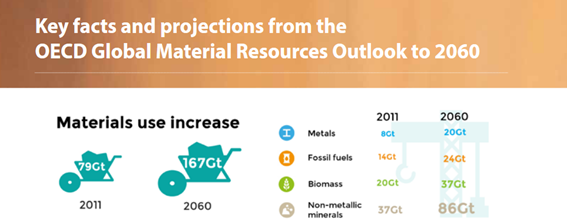
OECD (2019), Global Material Resources Outlook to 2060: Economic Drivers and Environmental Consequences, OECD Publishing, Paris, https://doi.org/10.1787/9789264307452-en.
At the same time, the World Bank forecasts a 70% increase in the amount of waste generated each year by 2050.
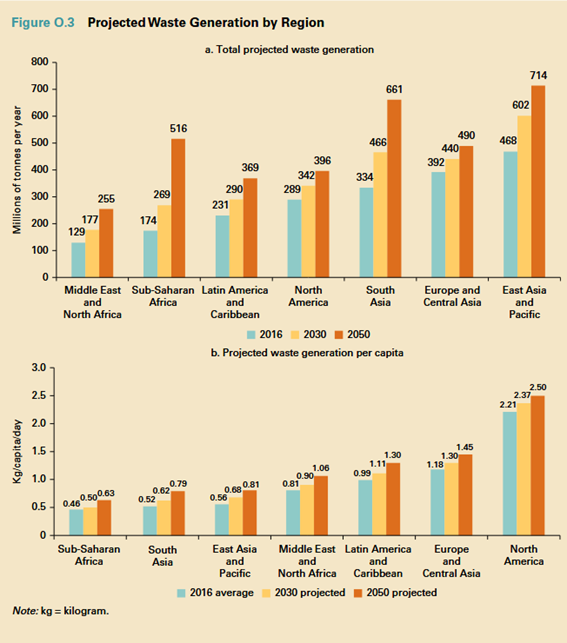
Kaza, Silpa, Lisa Yao, Perinaz Bhada-Tata, and Frank Van Woerden. 2018. "What a Waste 2.0: A Global Snapshot of Solid Waste Management to 2050." Overview booklet. World Bank, Washington, DC. License: Creative Commons Attribution CC BY 3.0 IGO.
Faced with this situation, the European Union has embarked on a strategy to diversify sources of supply, promote short supply chains and decarbonize industrial supply chains. This approach is based on strengthening local sourcing and finding sustainable alternatives to critical raw materials, while fully integrating decarbonization objectives into the whole process.
This implies, among other things, giving priority to recycled materials - from a still emerging and unstructured market - and establishing new relationships with specialized suppliers. The purchasing department is thus called upon to transform both its organization and its practices, in order to meet these new challenges.
Integrating the circular economy into the purchasing function: what's at stake?
The circular economy is based on the logic of reducing waste and recovering resources throughout their life cycle. It breaks with the traditional linear model of "extract, produce, consume, discard", by emphasizing "reduce, reuse, recycle".
The latest studies show that making this transition successfully requires integrating sustainability right from the product design stage, rather than managing waste at the end of the process.
This ecological approach to new product development should aim to minimize environmental impact throughout the life cycle, and encourage changes in traditional supply systems, such as establishing new relationships with suppliers from alternative markets or other sectors outside the traditional supply system.
A survey of five industrial companies identified the main levers of action for the purchasing department in this context of circular transformation.
Four key contributions of the purchasing function to the circular economy
The purchasing department currently contributes to the implementation of circular models in four different ways:
1. Sourcing raw materials from secondary markets
In a context of scarcity, increasing competition and often high costs, buyers now need to identify quality recycled materials. This requires close collaboration with design teams to ensure that these materials meet technical and environmental requirements.
This collaboration is all the more important as the design of elle-même products has evolved, moving from a purely aesthetic and functional approach to the integration of the environmental dimension.
This change means finding new materials, such as recycled components, that are both technically suitable and of high quality, to facilitate the development of recyclable products.
This also means rethinking the strategic objectives of the purchasing function, as illustrated by this testimonial gathered as part of the study:
"Our aim is to use recycled materials wherever possible. If this is not possible, we give preference to alternatives of biological origin."
2. Provide technical information on recycled materials
The purchasing department occupies a central position between the technical teams, suppliers and other company stakeholders. It plays an essential role in centralizing and circulating information on recycled materials, particularly concerning requirements, technical characteristics, traceability and environmental impact.
This mission requires close collaboration between the company's various business units to facilitate the sharing of data on product life-cycles and the properties of the materials required. In practice, purchasing teams coordinate exchanges with the supply chain, in particular by requesting :
- life cycle analysis (LCA) data,
- certificates of recyclability or circularity of materials,
- as well as any other information needed to guarantee their traceability.
However, difficulties frequently arise: some suppliers may be reluctant to share sensitive data, or there may be inconsistencies in the information transmitted. These situations complicate project management and can generate tensions in supplier relations.
Our study highlights the need for formal, proactive management of supplier relations, based on transparent, structured and comprehensive exchanges. Beyond the simple collection of information, it is essential to train suppliers and raise their awareness of the importance of sharing technical data on recycled materials and the management of their waste. This effort is essential to support the design of circular products and encourage their recycling at the end of their life cycle.
In this context, the purchasing department plays a decisive role in setting up a structured system for exchanging information on raw materials and their end-of-cycle management. This ensures access to reliable data for the design of more sustainable products.
3. Guarantee the transparency, reliability and quality of supplier data
In a circular value chain, the quality of design and purchasing decisions depends directly on the reliability, transparency and standardization of data exchanged between players. However, the absence of common industry benchmarks, notably for recycling rates or life-cycle analyses (LCA), hampers collaboration and limits product optimization based on sustainability criteria.
For example, in our study, technical design teams pointed out that it is difficult to optimize products in a circular logic, as there are no universal criteria for measuring the durability of materials.
Faced with this situation, some companies have successfully experimented with pilot collaboration models, based on standardized data exchange tools. These approaches have strengthened alignment between purchasing, design and sustainable development teams, and improved decision-making in terms of circularity.
As part of this dynamic, data integration platforms are emerging, like Catena-X in the automotive sector, or similar initiatives in the automotive and agricultural sectors. Their aim: to strengthen collaboration between procurement, design and sustainable development teams.
4. Setting up new cooperative ventures outside the traditional supply chain
The growing importance of circular models is leading to the emergence of new partnerships, particularly with waste collection and processing companies. These collaborations aim to secure the flow of recycled materials and guarantee their traceability.
Our study highlights these emerging collaborations with specialist waste collection and processing organizations, which support secondary suppliers by guaranteeing regular supplies of recycled materials.
The study also shows that to take full advantage of circular sourcing, close collaboration between all links in the value chain is essential. Material suppliers, manufacturers and recycling companies need to work together, especially with suppliers of critical materials, to build ambitious circular economy models.
By acting as a catalyst for these synergies, the purchasing function can play a driving role in this dynamic.
Two major challenges for the purchasing function
Establish common standards for data on circular materials
To operate efficiently, buyers need structured, comparable data on recycled materials. However, current data sheets are often incomplete, failing to indicate the percentage of recycled material, for example.
The lack of a reference system means that companies have to carry out a large number of tests and engage in cumbersome evaluation processes. The creation of recognized standards for measuring the circularity of materials is therefore a priority.
Developing the skills of purchasing professionals in innovation and sustainability
The rise of the circular economy is profoundly transforming purchasing professions. Identifying unconventional suppliers, managing complex partnerships and mastering the technical and regulatory challenges associated with materials are all missions that require new skills, at the crossroads of innovation, CSR and project management.
There is no doubt that a purchasing manager who develops skills in both innovation and sustainability will be able to meet the requirements of internal company departments in engineering design, research, product development or production, which depend on cooperation with suppliers to meet the demands of a circular economy model.
To meet these expectations, companies need to review their recruitment criteria and invest in ongoing training. Purchasing departments now need profiles capable of piloting transformation projects in line with the company's sustainability objectives.
Things to remember
The transition to circular supply chains is no longer an option, but a strategic imperative. Against a backdrop of geopolitical and environmental pressure, the ability to source secondary materials reliably, secure flows and create new alliances is becoming a key lever for the resilience and competitiveness of European companies.
Purchasing departments have a decisive role to play: by diversifying sources of supply, structuring the sharing of technical information, and strengthening cooperation with internal and external partners, they can accelerate the transformation towards more sustainable business models.
References
Siltaloppi, J. y Jähi, M. (2021). "Toward a sustainable plastics value chain: Core conundrums and emerging solution mechanisms for a systemic transition". Journal of Cleaner Production, 315.
Picaud-Bello, K., Johnsen, T., Calvi, R. y Giannakis, M. (2019). "Exploring early purchasing involvement in discontinuous innovation: A dynamic capability perspective". Journal of Purchasing and Supply Management, 25 (4).
Goyal, S., Chauhan, S. y Mishra, P. (2021). "Circular economy research: A bibliometric analysis (2000-2019) and future research insights". Journal of Cleaner Production, 287.
Kowsari, E., Ramakrishna, S., Gheibi, M. y Chinnappan, A. (2023). "Marine plastics, circular economy, and artificial intelligence: A comprehensive review of challenges, solutions, and policies". Journal of Environmental Management, 345.
Legenvre, H. y Hameri, A. P. (2024). "The emergence of data sharing along complex supply chains". International Journal of Operations & Production Management, 44 (1).
Picaud-Bello, K., Schiele, H., Koch, V. y Francillette, M. (2024). "Innovation through sustainability: Identifying purchaser skills fostering green innovation". Cleaner Logistics and Supply Chain, 10



No comment
Log in to post comment. Log in.