


News
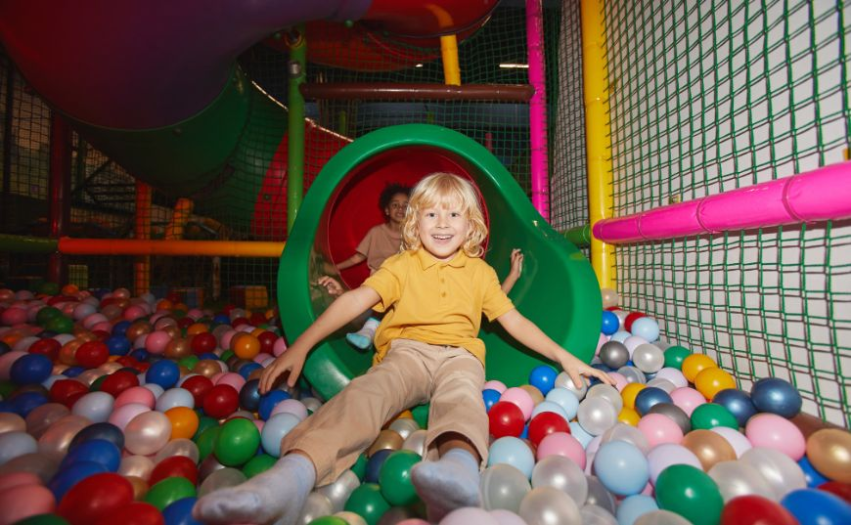
Kids parks: family fun in the face of market pressure
Authors
Elodie Jouny-Rivier: Professor of Marketing and Director of the "Prospective Family Consumption" Chair at ESSCA - ESSCA
Emeline Martin: Senior lecturer in management science, University of Angers
Gulli Parc, My Dreamland, Royal Kids, Youpi Parc or Fun City... these new children's playgrounds, also known as "kids parks", have been booming in recent years.
The indoor leisure sector is experiencing strong momentum and is establishing itself as a real powerhouse in the entertainment market. With sales topping the billion euro mark in 2023, and annual growth of 15% since 2019, it attracts over 13 million visitors every year.(Source: SELI 2023 Indoor Leisure Report)
Buoyed by strong demand (the French are not prepared to cut back on leisure activities, despite the economic climate), these activities appeal to a wide audience. Not surprisingly, they also attract investors, thanks to an average gross profitability of 28% (for multi-purpose leisure, twice that of amusement parks). Indoor leisure activities are now the third most popular leisure activity in France, while kids parks are the most popular indoor space behind bowling. To better understand the reasons behind this success, let's take a look at My Dreamland.
Learning laboratories
These play areas, open to toddlers through to pre-teens (aged 1 to 12), offer a safe environment where children can give free rein to their quest for discovery, experimentation and socialization. The kids parks have been designed as real learning laboratories, to help children develop self-confidence, coordination and problem-solving skills.
The research by Whitebread and colleagues emphasizes that free and structured play promotes children's cognitive, social and emotional development. However, other authors have pointed out that the beneficial effect of indoor play also depends on the diversity of activities and supervision offered. The more a play space offers material diversity, opportunities for exploration and even moderate physical risk-taking, the more it promotes children's overall development.
Kids parks are also a perfect illustration of the marketing concept of " retailtainment " or " retailment " - a contraction of retail and entertainment.
Theorized in academic literature as a strategy for transforming the point of sale into a multi-experience space, retailtainment "aims to provide an extraordinary playful experience through the sensorialization of space".
At My Dreamland, for example, attractions and additional services such as restaurants and snack bars, a press area and a rest area with Internet connection are all combined in a single location. These spaces also meet the growing need for "turnkey" family experiences, i.e. complete, practical solutions where everything is designed for the pleasure and convenience of families.
Experiential through multisensory
The CCMP case study we carried out on My Dreamland analyzes the marketing strategy of this venue. It deciphers the challenges of the family entertainment market, examines its positioning in relation to the competition, and identifies the key levers for a successful customer experience, emphasizing the importance of fun, immersive and customizable activities.
With three sites in France, My Dreamland embodies the evolution of these leisure facilities towards fully immersive, multi-sensory worlds. The park stands out for the diversification of its attractions, its theming around the magic forest and its birthday themes, offering personalized worlds for every child.
Dorian Trecco, co-founder and managing director of My Dreamland, explains:
"We've created a multi-activity park where you can really find all the attractions that are usually single-activity."
The use of advanced technologies is also a key aspect of the customer experience at My Dreamland (Osny park, Val d'Oise), as underlined by the recent installation of Virtuarides' VR TOWER platform. This innovation provides immersive sensations thanks to Meta Quest 3 headsets and fans simulating the effects of wind and falls.
Family influencers
The success of such a venue also hinges on marketing communications. The case mentions the strategic partnerships forged by My Dreamland with local and regional family influencers. A case in point is the collaboration with Marine-Daphnée Gaillard, content creator on Instagram under the name Rêveuse en pagaille, who shared her experience of the park with her community of over 120,000 followers.
The park also skilfully integrates educational elements into its attractions. This trend towards " edutainment " can be found in many kid parks.
For example, Panomano, a new concept launched in France in 2025, invites children to explore a mini-town where they can take on different roles (chef, airline pilot or policeman), encouraging learning through imitative play and the discovery of everyday professions. Gulli Parc, meanwhile, incorporates interactive games based on licenses found on its children's channel, while Royal Kids focuses on obstacle courses that develop motor skills and coordination.
Challenges to sustain the concept
Despite their success, however, kid parks have to contend with a number of structural weaknesses, which our case study exposes.
Firstly, competition continues to intensify: with over 2,500 indoor parks, this market is seeing the emergence of new hybrid concepts (such as color, brick or quiz rooms) that fragment the customer base and make it harder to build loyalty. This multiplication of offers forces each player to constantly renew its attractions, which weighs on investment costs and profitability.
At the same time, major groups, previously absent from this sector dominated by independents, are beginning to establish themselves with more accessible offerings and substantial financial resources, accentuating the competitive pressure. As a result, some market players are worried about a scenario similar to that in the fitness sector, where the arrival of Basic Fit and the price war have ended up concentrating the market around a handful of large groups.
The kids parks business model also remains vulnerable to seasonality and pressure on families' purchasing power. Attendance, an essential condition for profitability, is a major challenge, especially as it tends to decline outside school vacation periods. In an inflationary environment, operators have to cope with irregular demand and rising fixed costs. In an attempt to smooth visitor flows, some parks are diversifying their activities by developing offers aimed at companies(B-to-B), as My Dreamland does by hosting corporate events.
Finally, while indoor play areas promote socialization and motor skills, academic research to date has focused mainly on the unique benefits of outdoor play (in particular, opportunities for movement, exploration and contact with nature).
That's why, in the face of these challenges, the future of kids parks will depend on their ability to innovate and offer sensational experiences, to diversify their services - including towards the B-to-B - and to strengthen their local roots.and strengthen their local roots, while remaining attentive to changes in family and social expectations.





No comment
Log in to post comment. Log in.